
Why Guided Care Makes a Major Difference for the Patient Experience
If you’ve ever been involved in a medical situation, you understand that things can get complicated very quickly. Even relatively routine visits to the hospital involve contact with a lot of people. The more extensive your stay, the larger the number of professionals you need to communicate with becomes.
Getting a little help navigating the mental health care process can make a big difference in outcomes. In this article, we take a look at why guided care is important.
Overview
Let’s say you go to the hospital for neck pain. You begin your treatment with a trip to the orthopedic unit. First, you meet with a nurse who takes down your information. Then you meet with a doctor who examines your neck. From there, you’re directed to the imaging lab for an X-ray.
Already, several professionals are involved, but the X-rays come back inconclusive. The orthopedist then refers you to rheumatology to determine whether there’s an inflammatory cause. Now you’re dealing with even more specialists.
What began as a relatively simple issue has turned into a complex, and likely expensive, process involving multiple providers. This is a common experience for many people who seek hospital care. The more complicated the situation, the more there is to navigate.
Some healthcare professionals are specifically there to make these experiences more manageable.
What Is a Nurse Navigator?
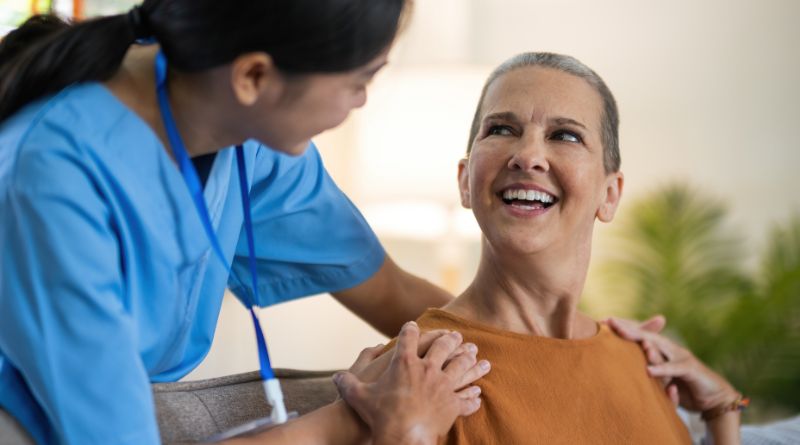
Nurse navigators provide robust support to patients as they enter the healthcare system. Nurse navigators are, as their title suggests, registered nurses. However, they’ve exited bedside care in favor of a more administrative or facilitating role. They’re there to help people navigate the complexity of the healthcare system.
Naturally, this means very different things depending on the circumstances. In the case of routine visits, they might help ensure that the patient understands where to go, why they’re being referred to certain places, what to expect, and possibly how to handle insurance interactions.
The more extensive the treatment, the more helpful the nurse navigator becomes. In cases of prolonged care, they may even extend into the residential setting to consult with patients and ensure that conditions at home are what they need to be. They often also play an important role in working with family members.
This is particularly true in cases where the patient is no longer in a position to care for themselves or manage their own interests. That could be someone who is very ill, very old, or very young. It doesn’t really matter. The job of the nurse navigator is to advocate for their patients in whatever form that takes.
In the next few headings, we’ll take a look at some skills that nurse navigators typically have.
Communication
Communication is arguably the most important skill of a nurse navigator. It’s the reason for their existence. They need to be able to help people understand complicated medical concepts clearly and in a way that minimizes stress to the greatest possible extent.
Their job is not to just to reiterate what the doctors said. It’s to present information in a way that is accessible to the person receiving treatment.
Often, good communication in the healthcare sense involves implementing active listening principles.
- Make eye contact approximately 80% of the time. Less signals disinterest. More is…a little unsettling. Trust us on this. Perfect eye contact sounds good on paper, but feels like something out of a horror movie in practice.
- Restate phrases to demonstrate comprehension. Occasionally putting the other person’s statement in your own words will prove that you are following along.
- Gesture regularly. The occasional nod or hand motion can go a long way toward showing that you are actively engaged in the conversation.
It’s not just that a good nurse listens. It’s that they make the other people feel heard. That’s a subtle distinction, but it can be massively impactful.
Compassion
Often, nurse navigators play an important emotionally supportive role in managing healthcare situations. Compassion is difficult to fully define, particularly given that it may need to be adapted based on the circumstances. Regardless, an important aspect of what any nurse navigator does is demonstrating empathy and making the people on their caseload feel more comfortable with the process.
Case Management
Case management is the final basic skill category relevant to the work of a nurse navigator. This is a more administrative aspect of their work and can involve many different responsibilities, including how they manage paperwork.
It’s probably not the aspect of the job that draws people to the work. But hey, something has got to grease the wheels of productivity, right?
What Kind of Credentials Do Nurse Navigators Have?
Despite the fact that nurse navigation is less clinical in nature than typical RN positions, it typically requires an advanced credential. Most often, this takes the form of an MSN or Master of Science in Nursing degree.
The specific MSN may depend on the requirements of the community where you live. Every state has its own regulations on what credentials nurses need to occupy certain roles. That said, in many cases, any MSN will do the trick.
Salary expectations do increase slightly, though not as much as they would in the case of a nurse practitioner, where an FNP with a master’s degree might make $150,000 a year. Nurse navigators typically stay in the upper five-figure range.
All of that said, it’s a great way to extend your career as a healthcare professional. In many cases, people leave the nursing profession altogether out of a sense of burnout. It’s through continuing education or advanced certification routes that people stay in the game. Simply put, they start doing adjacent work that they find more satisfying.
Conclusion
Nursing navigators occupy a dynamic and infinitely important role in the healthcare process. If you want to impact many different lives while doing rewarding work that you find genuinely enjoyable, this is a great way to do it.






Leave a Reply
Want to join the discussion?Feel free to contribute!