
How-Does-AI-Improve-Employee-Satisfaction

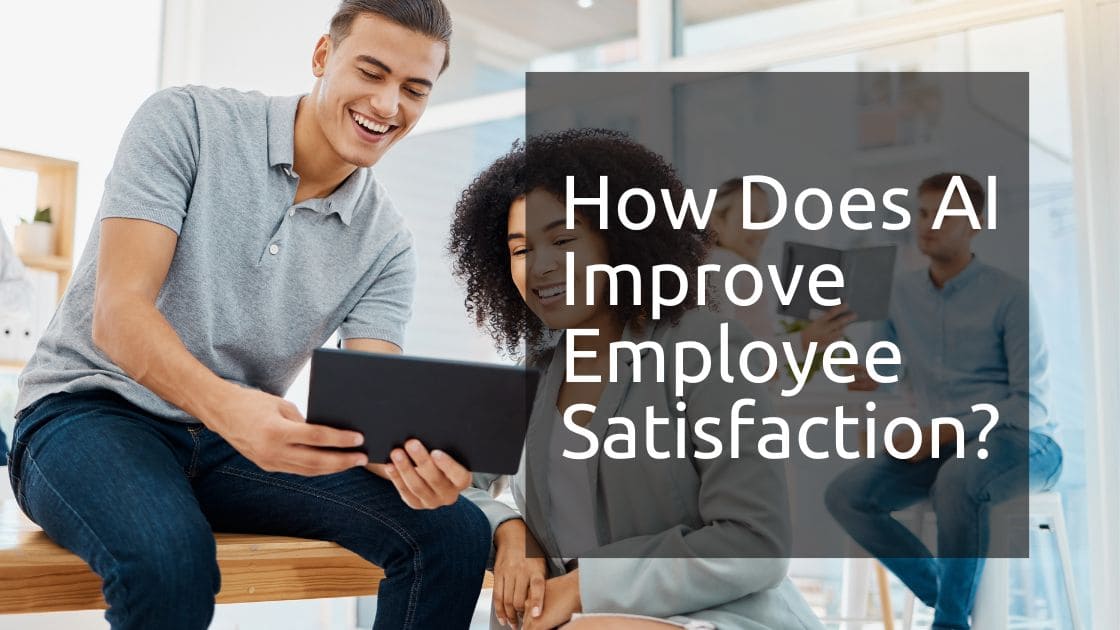
9 Actionable Ways AI Is Skyrocketing Employee Satisfaction – And Why Your Team Needs It
How-Does-AI-Improve-Employee-Satisfaction

This article was inspired by the original CloudApper guide “How Does AI Improve Employee Satisfaction?” (published by Matthew Bennett). Check out the full, detailed version here: How Does AI Improve Employee Satisfaction?.

With global employee engagement dipping to just 21% in 2025 (per Gallup’s State of the Global Workplace report), and AI use surging—reaching 66% among remote-capable workers, with 40% using it frequently—2026 is the year smart leaders turn to AI to reverse the trend. Tools like CloudApper hrPad are proving that AI doesn’t just automate; it humanizes the workplace by reducing frustration, personalizing support, and prioritizing well-being.

Inspired by CloudApper’s insightful guide, here are 9 practical ways AI is boosting employee satisfaction right now—especially for deskless and frontline teams in retail, manufacturing, healthcare, and beyond. Each includes real benefits and quick implementation ideas.

  1. Automates the Boring Stuff AI takes over repetitive tasks like data entry and scheduling. Employees reclaim time for creative, impactful work → less monotony, more fulfillment.
  2. Provides Instant HR Support Chatbots and virtual assistants answer questions 24/7. A global retailer slashed wait times from days to seconds, boosting satisfaction by 25%.
  3. Delivers Personalized Career Growth AI scans skills and goals to recommend custom training and projects. Tech teams using this report 30% higher engagement and faster skill development.
  4. Detects Burnout Early with Sentiment Analysis NLP tools monitor feedback and communications to spot stress patterns. Manufacturing firms adjusted schedules proactively, cutting voluntary turnover by 18%.
  5. Offers Tailored Learning Recommendations AI suggests relevant courses and resources based on performance data—turning training from “required” to “exciting” and driving retention.
  6. Streamlines Onboarding & Talent Fit From resume screening to personalized welcome plans, AI ensures better hires and smoother starts, helping new employees feel valued immediately.
  7. Enhances Team Communication Real-time translation, pattern insights, and optimization suggestions break down silos—vital for diverse or shift-based frontline teams.
  8. Customizes Rewards & Benefits AI matches perks (wellness, insurance) to individual needs and preferences → employees feel genuinely appreciated, increasing loyalty.
  9. Improves Workplace Safety Predictive analytics from data and sensors flag risks early, alerting teams and preventing incidents—building trust and peace of mind.

Quick Wins & Best Practices Start small: Pilot an AI chatbot or sentiment tool, gather employee input via pulse surveys, and measure changes in satisfaction scores. Address common concerns head-on—fear of job loss with upskilling programs, privacy with compliant platforms (GDPR/CCPA-ready, opt-in features). When done right, engaged employees (fueled by AI) are up to 87% less likely to leave.

The result? Happier teams, lower turnover, and stronger culture—without losing the human touch.

Ready to explore how these features work in a real HR platform?

Head to the original guide for in-depth examples, CloudApper hrPad specifics, and step-by-step advice: How Does AI Improve Employee Satisfaction?

Which of these 9 ways would make the biggest difference for your team? Comment below—let’s chat about it!

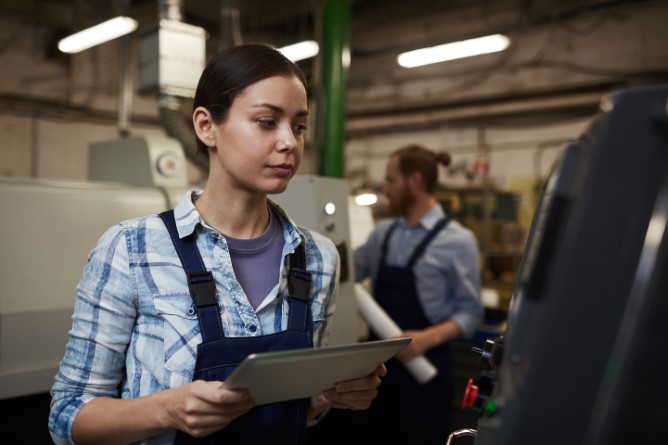
Workday HCM Time Tracking: Traditional Methods vs. Location-Based Time Tracking

Did you know that 60% of organizations report payroll inefficiencies due to inaccurate time tracking? If you’ve ever dealt with employee time discrepancies, you know how frustrating and costly it can be. Traditional methods of time tracking—think punch clocks, timesheets, or manual entries—are still common in many organizations, but they’re often riddled with errors, inefficiencies, and security risks. Thankfully, modern solutions like CloudApper AI TimeClock are changing the game, offering location-based tracking and automation for more accurate, compliant, and cost-effective workforce management.

Accuracy: Manual Punch-Ins vs. AI-Powered Biometric Authentication

Let’s start with accuracy. Traditional time tracking systems rely heavily on employees manually clocking in and out. This system is prone to errors—whether it’s employees forgetting to clock in or out, using another worker’s punch card, or accidentally recording the wrong time. In fact, a study from the American Payroll Association found that nearly 2% of employee time is lost due to these inaccuracies.

Now, compare that to CloudApper AI TimeClock, which integrates with Workday HCM and uses AI-powered biometric face recognition. This touchless system ensures that only the employee clocking in or out can record their time, eliminating the risk of “buddy punching” (when employees clock in for each other). The result? Accurate time records that are immediately available for payroll processing, ensuring no time is lost or incorrectly logged.

Also Read: How a Leading Retail Company Slashed Turnover by 30% Using Self-Service Kiosks

Compliance: Risk of Errors vs. Automated Tracking with Geo-Fencing

Compliance with labor laws is a critical issue for employers, particularly when it comes to accurate timekeeping. Traditional methods can lead to human errors or even deliberate time theft. For example, employees might forget to clock out for lunch, leading to overreported hours. Such mistakes not only affect payroll but also expose companies to potential compliance risks. According to the Department of Labor, companies have faced hefty fines due to poor timekeeping practices.

That’s where geo-fencing comes into play with CloudApper AI TimeClock. Geo-fencing creates virtual boundaries around specific work locations, so employees can only clock in or out when they’re within those designated zones. This means that workers can’t clock in before they arrive at work, or clock out after they leave. It also ensures that remote or field employees can’t record time from unauthorized locations. The automated tracking feature ensures that the data is always compliant with regulations like the Fair Labor Standards Act (FLSA), which requires accurate records of employee work hours.

Cost: Payroll Inefficiencies vs. Optimized Labor Costs with AI

When it comes to costs, traditional time tracking methods can be a drain on a company’s resources. Payroll inefficiencies, such as employees being paid for time they didn’t actually work, can lead to significant losses. Manual timesheets can also result in additional administrative work, with HR staff having to manually verify hours, adjust for discrepancies, and handle complaints. The result? Extra time and money spent on a process that could be much more streamlined.

CloudApper AI TimeClock not only reduces the need for administrative oversight but also cuts labor costs. With its automated location-based tracking and AI-driven analytics, the system reduces errors, eliminates time theft, and streamlines the payroll process. A retail client of mine, for example, saved over $200,000 annually by integrating AI time tracking and reducing payroll discrepancies by 35%. The best part? HR teams can spend less time handling timecard issues and more time on strategic tasks.

Also Read: Tracking Work Hours for Multi-Department Employees Is a Challenge— How to Solve It

Final Thoughts

The days of relying on outdated, inaccurate, and costly time tracking systems are over. With the integration of CloudApper AI TimeClock and Workday HCM, companies can not only improve the accuracy of their time tracking but also ensure compliance, optimize labor costs, and make the payroll process more efficient. Whether you’re managing a single location or multiple remote teams, the shift to AI-powered, location-based time tracking is a step toward modernizing your workforce management. If you’re ready to reduce payroll errors and improve your compliance processes, it’s time to make the switch to smarter, automated time tracking.

Are you ready to enhance your time tracking accuracy and boost efficiency? Let’s explore how CloudApper AI TimeClock can help your business today.