
How to Add AI to UKG, Workday, or SAP SuccessFactors Without Disrupting Your HR Operations

Your HR platform is already live. Employees are clocked in. Payroll is running. The last thing you need is a disruptive overhaul — but you also know your current HCM is leaving AI-driven efficiency on the table.

The good news: you don’t have to choose between stability and innovation.

This is the practical challenge many HR and operations leaders face when they decide to integrate AI with platforms like UKG, Workday, or SAP SuccessFactors. The platform works. The processes are set. But manual tasks still pile up, employee self-service is limited, and workforce data sits underutilized. Integrating AI should solve all three — without touching what’s already working.

Here’s how to approach it the right way.


Why HR Platforms Alone Aren’t Enough

UKG, Workday, and SAP SuccessFactors are powerful systems for managing payroll, time tracking, and employee data. But they were designed to standardize HR at scale — not to adapt intelligently to the unique workflows, compliance rules, and employee experiences your organization requires.

That means common AI-driven capabilities — automated shift scheduling, role-based self-service, predictive workforce analytics, or conversational HR assistants — either require expensive customization inside the platform or simply aren’t available out of the box.

The result: HR teams handle these gaps manually. That costs time, creates errors, and slows down the employee experience.


The Right Way to Integrate AI With Your HCM

Adding AI to an existing HR platform doesn’t mean rebuilding it. The most effective approach layers AI capabilities on top of your current system — connecting to it via API, extending its functionality, and automating the workflows your HCM was never designed to handle natively.

CloudApper WorkBridge is purpose-built for exactly this. It acts as an AI-native layer that connects to UKG, Workday, SAP SuccessFactors, and other major HCM platforms — adding custom workflows, intelligent self-service, and automation without modifying the core system.

Practically, this means your HR team can:

  • Automate repetitive tasks — shift assignments, PTO approvals, timesheet exceptions, and compliance workflows — that currently require manual intervention
  • Deploy AI-powered employee self-service so frontline and desk-based workers can manage schedules, request time off, and get HR answers instantly — without calling HR
  • Build role-specific experiences for different workforce types (frontline, hybrid, salaried) from a single connected layer
  • Access workforce analytics drawn from your existing HCM data — surfacing trends, compliance gaps, and scheduling insights without a separate BI tool
  • Extend functionality in days, not months — without IT dependency, vendor consulting fees, or risk to your live system

Because WorkBridge sits outside your HCM rather than inside it, your core platform stays stable. Upgrades, migrations, and vendor changes don’t erase your customizations.


A Practical Starting Point

Before deploying, identify where manual work or employee friction is highest. Common starting points for organizations running UKG, Workday, or SAP SuccessFactors include:

  • Frontline employees with no mobile self-service access
  • Shift scheduling conflicts handled by supervisors manually
  • HR queries that flood the HR team’s inbox daily
  • Compliance workflows that differ by location, role, or union agreement

Each of these is a concrete WorkBridge deployment scenario — not a future-state roadmap item, but something teams are configuring and running today.


No Technical Expertise Required

One of the most common concerns about AI integration is the IT lift involved. WorkBridge addresses this directly: HR teams can configure workflows, self-service experiences, and automation rules without writing code or waiting on a developer.

For a deeper look at the full integration approach across platforms, see: How to Seamlessly Integrate AI with HR Platforms Like UKG, Workday, or SAP SuccessFactors


The Bottom Line

Your HCM is not the problem. The gap between what it does out of the box and what your workforce actually needs — that’s the problem. AI integration closes that gap, and it doesn’t have to mean a new system, a large budget, or months of implementation.

CloudApper WorkBridge makes it possible to extend what you already have — adding AI where it matters most, at the speed your HR team actually needs it.

Want to see how it works for your platform? Explore CloudApper WorkBridge →

No Code Mobile Apps: Build Custom Enterprise Apps Without Coding to Automate Business Processes

Many organizations still struggle with slow, error-prone manual workflows that frustrate employees and limit growth. Field teams, sales staff, and operational personnel waste time on paperwork, repeated data entry, and waiting for approvals. No code mobile apps solve this by letting businesses create powerful, custom mobile solutions that automate everyday processes—without hiring developers or writing any code.

The Big Challenge: Inefficient Manual Workflows

Paper forms, spreadsheets, and disconnected desktop systems create bottlenecks. Data gets lost or duplicated, decisions are delayed, and teams cannot work effectively when away from their desks. This is especially painful for distributed teams that need real-time information and instant action on the go.

No code mobile apps directly tackle these issues by turning smartphones into secure, branded tools for data collection, workflow automation, and collaboration.

How No Code Mobile Apps Streamline Business Processes

Modern no-code platforms make it simple to design apps that deliver:

  • Real-time data capture — Scan barcodes, take photos, dictate notes, or fill digital forms on-site. Information flows instantly to central systems, removing transcription mistakes.
  • Automated workflows — Trigger approvals, notifications, and task assignments automatically. For example, a service request can notify the right technician and update inventory in one seamless flow.
  • Offline-first functionality — Teams continue working without internet, with data syncing when connectivity returns.
  • Seamless enterprise integration — Connect directly to existing CRM, ERP, accounting, or database systems for a single source of truth.

These capabilities empower non-technical teams to build exactly what they need—tailored to their unique operations.

Why Choose No Code for Mobile App Development

Traditional mobile app development is costly, time-consuming, and requires ongoing maintenance. No-code platforms eliminate these barriers with intuitive drag-and-drop interfaces, ready-made templates, and fast deployment. Updates can be rolled out instantly without app store delays.

Many platforms also support AI integration, allowing mobile apps to include intelligent agents that analyze data, recommend actions, or handle routine decisions right inside the app.

Key Benefits for Any Industry

Companies adopting no code mobile apps experience faster operations, higher accuracy, better employee engagement, and significant cost reductions. The result is a competitive advantage through agile, customized tools that evolve with the business.

Whether you manage field service, sales, inventory, or internal approvals, no code mobile apps deliver the flexibility and speed modern businesses demand.

Ready to build your own custom mobile solutions? Explore CloudApper’s powerful no-code low-code platform for enterprise software development: https://www.cloudapper.ai/no-code-low-code-platform-for-enterprise-software-development/.

Enhance your apps with intelligent automation using CloudApper AI agents: https://www.cloudapper.ai/ai-platform-build-integrate-llm-with-enterprise-systems/.

For more details on leveraging mobile technology for process transformation, check the source article: https://www.cloudapper.ai/no-code-platform/using-mobile-apps-to-transform-business-processes/.

The Personalization Gap in Total Rewards: How AI Delivers Tailored Compensation & Benefits Experiences at Scale

One of the biggest missed opportunities in modern compensation and benefits management is the personalization gap. Employees receive generic communications about pay structures, bonus programs, health plans, retirement options, and perks—yet their needs, life stages, financial goals, and preferences vary dramatically. Without tailored guidance, workers feel disconnected from their total rewards package, leading to lower engagement, suboptimal benefit elections, underutilized programs, missed tax advantages, and ultimately higher turnover as employees seek employers who “get” them better.

Why the Personalization Gap Hurts Compensation & Benefits Programs

  • One-size-fits-all explanations fail to address individual questions like “How does this 401(k) match affect my take-home?” or “What’s the best health plan for someone with chronic conditions?”
  • Employees delay or skip enrollment decisions because they lack clear, relevant insights.
  • HR struggles to scale personalized advice across thousands of workers without massive headcount increases.
  • Generic portals provide static info but no interactive, context-aware support.
  • Result: lower satisfaction scores, reduced perceived value of benefits, and weaker retention—especially among younger or diverse workforces who expect consumer-like experiences.

4 Ways AI Closes the Personalization Gap in Total Rewards

  1. Deliver Context-Aware, Instant Answers: Employees ask natural-language questions and receive responses customized to their role, salary band, location, family status, and enrollment history.
  2. Provide Personalized Recommendations: AI analyzes individual data (anonymized and compliant) to suggest optimal plan choices, contribution levels, or additional perks that align with personal goals.
  3. Enable Proactive, Life-Event Guidance: Trigger timely nudges during marriage, childbirth, home purchase, or retirement planning—helping employees maximize benefits without manual outreach.
  4. Scale 1:1 Support Without Scaling Headcount: AI handles thousands of unique queries simultaneously, 24/7, freeing HR to focus on complex cases and strategic design.

CloudApper hrGPT: AI-Powered Personalization for Compensation & Benefits

CloudApper hrGPT transforms total rewards from generic to genuinely personal. This intelligent chatbot integrates natively with your HCM platform (UKG, Workday, Oracle, SAP, etc.), ingests your specific policies, plan documents, and employee data, then delivers precise, individualized answers and recommendations around the clock.

Employees feel seen and supported—whether asking about bonus eligibility, comparing health plans, or understanding retirement impacts. HR gains massive efficiency (up to 50% workload reduction), higher benefit utilization rates, improved employee satisfaction, and stronger retention—all while maintaining full compliance and data privacy.

Ready to close your total rewards personalization gap? Read the full original guide for deeper insights: How Is AI Used in Compensation and Benefits?

Experience truly personalized compensation & benefits support today: CloudApper hrGPT – HCM Automation Solution

Move beyond generic total rewards communications. Let AI deliver the tailored experiences employees expect—and watch engagement, retention, and program value soar.

Data Readiness Roadblock: Why Poor Data Quality Is Killing Most Enterprise AI Initiatives—and How to Fix It

One of the most underestimated yet devastating barriers to successful AI adoption in organizations is data readiness. Companies pour resources into advanced AI models and exciting use cases, only to discover that fragmented, inaccurate, outdated, or siloed data prevents reliable performance at scale. This hidden issue turns high-potential projects into expensive disappointments, erodes trust in AI outputs, amplifies bias risks, and blocks the path from experimentation to enterprise-wide impact.

Why Data Readiness Remains a Top AI Adoption Blocker

High-quality, accessible, and well-governed data is the foundation of effective AI. Yet most enterprises face persistent challenges:

  • Fragmented data silos — Information scattered across disconnected systems makes it hard for AI to access complete, real-time context.
  • Poor data quality — Inconsistencies, duplicates, missing values, or biases lead to unreliable predictions and flawed decisions.
  • Insufficient proprietary data — Generic models lack the specific organizational knowledge needed for tailored, high-value results.
  • Governance and privacy gaps — Compliance concerns slow progress while risking security breaches or regulatory violations.
  • Legacy system limitations — Old infrastructure hinders clean data pipelines and real-time integration.

The consequence? AI delivers inconsistent results, teams lose confidence, pilots fail to scale, and leaders question the entire investment.

4 Practical Steps to Achieve Data Readiness for AI Success

  1. Audit and Clean Your Data First Conduct a thorough assessment of existing data sources. Identify quality issues, eliminate silos where possible, and prioritize high-impact datasets for initial AI efforts.
  2. Build Strong Governance Early Establish clear policies for data ownership, quality standards, privacy, and bias mitigation. This builds trust and ensures compliance from the start.
  3. Enable Seamless, Secure Integration Use platforms that connect AI directly to your enterprise systems without major overhauls. Ensure bidirectional, real-time data flow while maintaining strict security controls.
  4. Start Small with High-Quality Subsets Focus on clean, relevant data pockets for quick wins. Demonstrate accurate, valuable outcomes to gain buy-in before expanding to broader datasets.

CloudApper AI: Your Path to Data-Ready AI Deployment

CloudApper AI overcomes data readiness hurdles with its no-code platform. Securely train custom AI agents on your proprietary corporate data, integrate bidirectionally with systems like UKG, Workday, Oracle, SAP, and Salesforce, and deploy intuitive interfaces—all while enforcing enterprise-grade privacy and governance. No massive data migrations or expert teams required; AI activates reliably and scalably, turning your existing data into a competitive advantage.

Looking for the broader foundational steps? Check out the original guide for a complete overview of rolling out AI: How to Roll Out Artificial Intelligence in Your Organization

Begin making your data AI-ready today: CloudApper AI Platform – Build & Integrate LLM with Enterprise Systems

Stop letting data issues derail your AI ambitions. Achieve reliable, scalable adoption and unlock genuine business value without the usual headaches.

Why Healthcare Providers Are Turning to AI Chatbots: Boosting Patient Satisfaction, Cutting No-Shows, and Streamlining Care Delivery

Have you ever wondered why more healthcare organizations are integrating AI chatbots to transform patient interactions, leading to higher satisfaction scores, fewer missed appointments, and smoother daily operations?

In today’s healthcare environment, where patients expect quick, convenient access to information and services, AI-powered chatbots are stepping in as reliable digital assistants. They handle a wide range of routine tasks around the clock—scheduling appointments, sending personalized reminders, answering insurance and billing questions, guiding symptom inquiries, and facilitating registration—without the need for staff intervention. This constant availability eliminates frustrating wait times on phone lines or delayed email responses, allowing patients to get the support they need exactly when they need it.

One of the most tangible impacts is on patient satisfaction. Studies and real-world implementations show that chatbots deliver instant, empathetic responses that make patients feel heard and valued. For example, engagement rates often exceed 90% among enrolled users, with some systems achieving care plan adherence as high as 97%. Patients report greater comfort discussing sensitive topics privately with AI, reduced cognitive load (especially among older adults), and overall improved experiences through personalized, multilingual support. These factors contribute to stronger trust, better retention, and higher likelihood of patients recommending the provider to others.

A key driver of satisfaction is the reduction in no-shows. Automated, timely reminders via chatbots significantly decrease missed appointments—often by 20-25% or more in optimized setups. By confirming bookings, rescheduling easily, and providing contextual nudges (like prep instructions or transportation tips), chatbots help patients stay committed to their care plans. This not only boosts clinic efficiency and revenue but also ensures better health outcomes through consistent follow-up and adherence.

Beyond patient-facing perks, chatbots alleviate administrative pressures on healthcare teams. They automate high-volume inquiries, freeing nurses, physicians, and front-desk staff from repetitive calls and data entry. This shift allows providers to dedicate more time to complex cases, meaningful consultations, and preventive care—ultimately supporting higher-quality service delivery and operational cost savings.

The healthcare chatbots market underscores this momentum, with the global size estimated in recent reports from around USD 300-1,200 million (varying by source and scope) and projected strong growth at CAGRs typically in the 20-24% range over the coming years, fueled by advancements in natural language processing, rising demand for digital health tools, and the push for accessible, efficient care.

Adopting an AI chatbot is straightforward with modern no-code platforms. The typical process involves:

  1. Identifying priorities — Focus on high-volume areas like appointment management, patient intake, or inquiry handling.
  2. Customizing securely — Tune the AI for accuracy and embed HIPAA-compliant privacy features.
  3. Loading knowledge — Train with your organization’s specific policies, FAQs, and guidelines.
  4. Crafting conversations — Design intuitive, empathetic flows for web, app, SMS, and other channels.
  5. Deploying seamlessly — Integrate with existing systems like EHR or ERP for smooth operations.

CloudApper Conversational AI Chatbot delivers specialized agents that work together for comprehensive support:

  • Patient Registration Agent — Simplifies onboarding through natural dialogue.
  • Appointment Management Agent — Enables effortless 24/7 booking, changes, and reminders.
  • Billing Agent — Offers clear explanations of charges.
  • Insurance Verification Agent — Provides quick coverage checks.
  • Patient Service Feedback Agent — Captures insights to refine services.
  • Compliance Agent — Maintains adherence to key regulations.

With features like multi-channel access, high reliability, and tailored personalization, CloudApper helps elevate satisfaction, minimize no-shows, reduce staff workload, and enhance overall care efficiency.

Ready to see how AI chatbots can drive better patient experiences and operational wins for your practice?

Check the detailed guide: How to Build an AI Chatbot for Healthcare Patient Engagement

Explore CloudApper Conversational AI Chatbot for direct improvements in patient satisfaction and reduced burnout: Improve Patient Experience & Reduce Health Worker Burnout with Conversational AI

AI-Powered Compliance That Actually Boosts Engagement: The Unexpected HR Training Win

AI in Training and Development in HR is delivering one of its most surprising and practical victories: transforming mandatory compliance training from a universally dreaded checkbox exercise into an efficient, low-friction process that quietly increases overall employee satisfaction with learning by 40%.

Rather than treating compliance as a separate, burdensome obligation, intelligent AI platforms now weave it seamlessly into personalized development journeys. The system automatically detects when refreshers or new regulations are due based on role, location, tenure, and real-time changes—then delivers them in bite-sized, contextually relevant formats at the perfect moment. No more mass email blasts, endless tracking spreadsheets, or frustrated follow-ups.

A mid-sized IT company experienced this shift firsthand after implementing CloudApper hrGPT. The platform handled compliance assignments proactively and unobtrusively while continuing to recommend tailored skill-building content for each individual. Employees no longer felt bombarded by irrelevant training; instead, they received timely, useful modules that aligned with both regulatory needs and personal growth. The combined effect was powerful: satisfaction with the entire training experience rose 40%, and HR’s administrative burden for managing training logistics fell by 60%—freeing the team to invest in higher-value talent initiatives.

This approach proves that AI doesn’t just make training smarter; it makes mandatory requirements feel supportive rather than punitive, creating a rare win-win for compliance, engagement, and operational efficiency.

For the full picture of how AI is reshaping training—including this compliance angle, personalization tactics, skill-gap strategies, and more—read the comprehensive guide: How Is AI Used in Training and Development in HR.

Ready to make compliance effortless and turn training into a genuine employee benefit? Discover how CloudApper hrGPT achieves these outcomes—download the brochure here and see the platform that’s quietly changing the game for HR teams worldwide.

AI Chatbot for Enterprise Knowledge Management: Instant, Intelligent Access to Your Organization’s Full Expertise

This teaser summarizes the core value and benefits from the original CloudApper article. For the complete technical explanation, integration examples, security model, performance data, and how CloudApper delivers a powerful AI chatbot for enterprise knowledge management, read the full guide here: Revolutionizing Enterprise Knowledge Management: The AI Chatbot Advantage with CloudApper

In most enterprises, knowledge is trapped: buried in SharePoint libraries, Confluence pages, internal wikis, HR systems, ticketing databases, scattered Google Drive folders, and forgotten email threads. Employees waste countless hours searching, asking around, or submitting support tickets just to find answers that already exist.

An AI chatbot for enterprise knowledge management changes this completely.

By intelligently indexing and understanding your entire internal knowledge ecosystem, the chatbot becomes the single, conversational gateway to accurate information. Employees ask questions in natural language and receive precise, context-aware answers in seconds—no more folder diving, no outdated answers, no “I’ll check and get back to you.”

What sets a true AI chatbot for enterprise knowledge management apart:

  • Unifies fragmented sources (documents, policies, procedures, wikis, intranets, databases) into one searchable, intelligent layer
  • Understands intent and nuance (“What’s the current travel policy for international trips?” vs. “How do I submit a mileage claim in Europe?”)
  • Delivers real-time freshness — when a document or policy updates, the chatbot knows instantly
  • Enforces role-based access controls so sensitive data stays protected
  • Offers mobile-first, multilingual support — perfect for deskless, frontline, shift, remote, and global teams
  • Continuously improves through usage analytics and user feedback

Companies using an AI chatbot for enterprise knowledge management typically see:

  • 60–80% fewer routine internal support tickets
  • Up to 70% reduction in time spent searching for information
  • Faster onboarding and knowledge transfer for new hires
  • Preservation of institutional knowledge despite turnover
  • Elimination of knowledge silos across departments and tools
  • Measurable gains in productivity and employee satisfaction

CloudApper’s AI chatbot for enterprise knowledge management excels with deep connectors to common enterprise platforms, enterprise-grade security (data residency, encryption, role-based controls, GDPR/SOC 2/HIPAA compliance), and easy, no-code deployment.

Want to explore the full suite of enterprise AI capabilities — from knowledge management to HR automation, workforce intelligence, and more? Check out the complete platform: CloudApper Enterprise AI Solutions

In a knowledge-intensive business environment, the organizations that win are those where the right information reaches the right person at the exact moment they need it — without barriers. An AI chatbot for enterprise knowledge management is no longer a nice-to-have; it’s becoming essential infrastructure for modern enterprises.

Ready to turn scattered internal knowledge into an instant, always-available conversational resource?

See exactly how CloudApper is leading with a next-generation AI chatbot for enterprise knowledge management — read the full article here: Revolutionizing Enterprise Knowledge Management: The AI Chatbot Advantage with CloudApper

Conversational AI: The Future of Employee Onboarding – Faster, Friendlier, and Far More Effective

This teaser pulls together the main highlights from the original CloudApper article. For the full details, including how the chatbot works, real benefits, integration info, and why it’s perfect for today’s workforce, read the complete guide here: Conversational AI for Employee Onboarding and Training

New hires often face a rocky start: too many documents, unclear instructions, delayed answers, and training that feels generic and disconnected. The result is slower ramp-up, lower engagement, and higher risk of early turnover.

Conversational AI solves this by transforming onboarding into a natural, interactive chat experience—almost like having a dedicated buddy on day one.

With an intelligent chatbot leading the way, new employees enjoy:

  • Instant answers to any question in everyday language (“How do I request time off?” “What’s the Wi-Fi password?” “When is my next paycheck?”)
  • Guided walkthroughs of forms, policies, and compliance steps through simple back-and-forth chat
  • Personalized training delivered in short, relevant bursts tailored to their exact role and progress
  • Mobile access anytime, anywhere—ideal for deskless workers, shift staff, remote hires, or global teams
  • Multilingual support and gentle reminders so nothing falls through the cracks
  • Real-time feedback options to help HR continuously refine the process

The outcomes are impressive:

  • Significantly shorter time to full productivity
  • Much higher completion rates for mandatory training
  • Stronger first impressions that reduce early exits
  • Sharp drop in HR support volume during the onboarding window
  • Better knowledge retention through interactive, context-aware learning

CloudApper’s conversational AI integrates easily with your HR systems, delivering a branded, welcoming experience that feels modern and personal rather than corporate and overwhelming.

In a competitive talent landscape where first impressions matter more than ever, giving new hires a smooth, supportive onboarding journey is one of the smartest ways to win loyalty and performance from the start.

Ready to move beyond PDFs and email chains to a truly conversational onboarding experience?

Learn exactly how conversational AI streamlines onboarding and training—check out the full article: Conversational AI for Employee Onboarding and Training

9 Actionable Ways AI Is Skyrocketing Employee Satisfaction – And Why Your Team Needs It

This article was inspired by the original CloudApper guide “How Does AI Improve Employee Satisfaction?” (published by Matthew Bennett). Check out the full, detailed version here: How Does AI Improve Employee Satisfaction?.

With global employee engagement dipping to just 21% in 2025 (per Gallup’s State of the Global Workplace report), and AI use surging—reaching 66% among remote-capable workers, with 40% using it frequently—2026 is the year smart leaders turn to AI to reverse the trend. Tools like CloudApper hrPad are proving that AI doesn’t just automate; it humanizes the workplace by reducing frustration, personalizing support, and prioritizing well-being.

Inspired by CloudApper’s insightful guide, here are 9 practical ways AI is boosting employee satisfaction right now—especially for deskless and frontline teams in retail, manufacturing, healthcare, and beyond. Each includes real benefits and quick implementation ideas.

  1. Automates the Boring Stuff AI takes over repetitive tasks like data entry and scheduling. Employees reclaim time for creative, impactful work → less monotony, more fulfillment.
  2. Provides Instant HR Support Chatbots and virtual assistants answer questions 24/7. A global retailer slashed wait times from days to seconds, boosting satisfaction by 25%.
  3. Delivers Personalized Career Growth AI scans skills and goals to recommend custom training and projects. Tech teams using this report 30% higher engagement and faster skill development.
  4. Detects Burnout Early with Sentiment Analysis NLP tools monitor feedback and communications to spot stress patterns. Manufacturing firms adjusted schedules proactively, cutting voluntary turnover by 18%.
  5. Offers Tailored Learning Recommendations AI suggests relevant courses and resources based on performance data—turning training from “required” to “exciting” and driving retention.
  6. Streamlines Onboarding & Talent Fit From resume screening to personalized welcome plans, AI ensures better hires and smoother starts, helping new employees feel valued immediately.
  7. Enhances Team Communication Real-time translation, pattern insights, and optimization suggestions break down silos—vital for diverse or shift-based frontline teams.
  8. Customizes Rewards & Benefits AI matches perks (wellness, insurance) to individual needs and preferences → employees feel genuinely appreciated, increasing loyalty.
  9. Improves Workplace Safety Predictive analytics from data and sensors flag risks early, alerting teams and preventing incidents—building trust and peace of mind.

Quick Wins & Best Practices Start small: Pilot an AI chatbot or sentiment tool, gather employee input via pulse surveys, and measure changes in satisfaction scores. Address common concerns head-on—fear of job loss with upskilling programs, privacy with compliant platforms (GDPR/CCPA-ready, opt-in features). When done right, engaged employees (fueled by AI) are up to 87% less likely to leave.

The result? Happier teams, lower turnover, and stronger culture—without losing the human touch.

Ready to explore how these features work in a real HR platform?

Head to the original guide for in-depth examples, CloudApper hrPad specifics, and step-by-step advice: How Does AI Improve Employee Satisfaction?

Which of these 9 ways would make the biggest difference for your team? Comment below—let’s chat about it!

Avoiding Costly Child Labor Violations

Avoiding Costly Child Labor Violations: How Franchises Can Stay Compliant with AI

Avoiding Costly Child Labor Violations

Recent child labor violations in the fast-food industry, including those involving Burger King and Popeyes franchise operators in Massachusetts, have put a spotlight on the challenges of labor law compliance. With penalties exceeding $2 million and back wages paid for violations, businesses must recognize the growing risk of non-compliance and its financial and reputational consequences.

For franchise operators managing multiple locations, ensuring compliance with labor laws is no small feat. The decentralized nature of these businesses, combined with varying state regulations, creates an environment where mistakes can happen. However, modern HR technology solutions like CloudApper hrPad’s employee self-service kiosk provide a proactive approach to managing compliance, reducing legal risks, and enhancing employee satisfaction.

Understanding the Growing Risk of Child Labor Violations

According to a report by the U.S. Department of Labor, child labor violations have increased by over 37% since 2020. Many of these violations stem from unintentional errors, such as failing to monitor minors’ work hours or assigning them tasks beyond their legal limits. Franchises, with their large workforce and multiple locations, are particularly vulnerable to such infractions. The consequences can be severe, leading to substantial fines, lawsuits, and reputational damage that can impact long-term business success.

How CloudApper hrPad Helps Franchises Stay Compliant

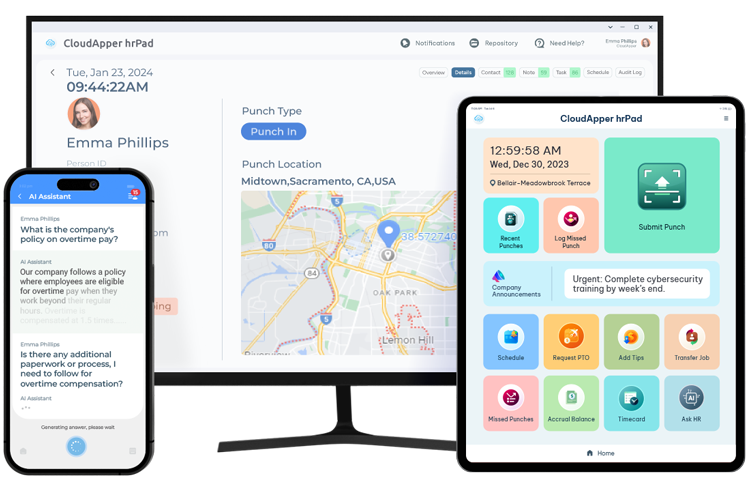
The hrPad employee self-service kiosk is a powerful tool designed to ensure compliance with labor laws while streamlining HR processes. Here’s how it can help franchise operators prevent child labor violations:

CloudApper-hrPad-Turn-any-iOS-or-Android-tablet

1. Automated Compliance with State-Specific Labor Laws

Labor laws vary across states, making it difficult for businesses to track regulations in multiple locations. hrPad can be customized to align with each state’s specific child labor laws, automatically flagging any violations before they occur. If a minor attempts to clock in beyond permitted hours or is scheduled for overtime, hrPad will notify both the employee and management, preventing costly errors in real-time.

2. Real-Time Alerts and Monitoring

Unlike traditional time-tracking methods, hrPad actively monitors employee work hours. It sends real-time alerts if a minor exceeds their legally allowed working hours, helping managers intervene immediately. This feature ensures compliance, even in fast-paced environments like quick-service restaurants, where scheduling oversights are common.

3. Geofencing to Enforce Legal Work Hours

With geofencing technology, hrPad ensures that employees can only clock in and out when physically present at their designated work location. This feature prevents minors from working outside their permitted hours, regardless of location-specific labor laws. For franchises with locations across different states, this ensures uniform compliance and eliminates potential violations.

4. AI HR Assistance for Legal Guidance

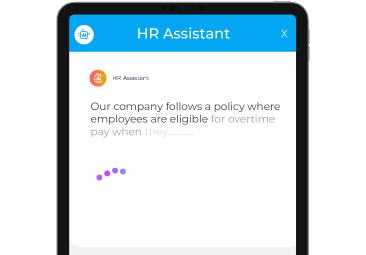
hrPad’s AI HR assistant is available 24/7 to provide instant answers to employees regarding labor laws and work restrictions. Younger workers can easily access information about their rights, shift limitations, and overtime rules, promoting awareness and proactive compliance. This feature empowers both employees and managers with the knowledge needed to avoid violations.

Cloudapper-hrpad-hr-assistant

A Real-World Example: Protecting Franchise Operators

Consider a fast-food franchise with multiple locations spanning several states. By implementing hrPad, each site can be configured to automatically enforce labor laws specific to its jurisdiction. The kiosk will:

  • Notify managers if minors are scheduled for overtime.
  • Prevent clock-ins beyond legally permitted hours.
  • Track all work hours in real-time for audit purposes.

As a result, the franchise can avoid hefty penalties, ensure compliance, and maintain a transparent and fair work environment for all employees.

The Business Benefits of Proactive Compliance

Beyond legal compliance, adopting smart HR technology like hrPad offers additional benefits, including:

  • Reduced HR Workload: Automating compliance checks frees HR teams from manual monitoring.
  • Improved Employee Experience: Employees can easily access their schedules, request time off, and receive instant HR assistance.
  • Cost Savings: Avoiding fines and lawsuits saves businesses significant financial resources while improving operational efficiency.

Take Action Before It’s Too Late

As child labor violations continue to rise, businesses cannot afford to take a reactive approach. Implementing CloudApper hrPad’s employee self-service kiosk ensures franchises stay compliant, reduce legal risks, and foster a workplace culture of trust and transparency. Don’t wait for an investigation—take control of labor law compliance today.

Contact us to learn how hrPad can help your business stay compliant and efficient.